A manufacturing company video has to do several jobs at once. It should explain what the business makes, show how it works, demonstrate credibility and give viewers a reason to continue the conversation. Trying to include everything, however, can leave the film feeling crowded and unfocused.
The most effective approach is to choose a clear message and support it with a balanced mix of processes, people and proof. Each section of the video should help a potential customer understand the company more quickly and feel more confident about its ability to deliver.
Begin with a clear value proposition
The opening should answer a simple question: why should the viewer pay attention to this manufacturer? That does not require a long corporate introduction. A concise statement about the company’s specialist capability, sectors, scale or customer outcome can establish relevance in the first few seconds.
The visuals should reinforce that message immediately. If the strength is large-scale production, show the facility and machinery. If the business is known for precision, lead with detailed processes and inspection. The opening works best when the words and images make the same promise.
Show the facility with purpose
Wide shots help viewers understand the size and organisation of an operation. They can reveal production lines, warehouse capacity, specialist equipment and the flow of work through the building. A facility tour becomes more useful when it is structured around customer questions rather than simply moving from one room to the next.
Filming in an active factory needs careful preparation. A practical plan for access, timing and safety keeps the crew efficient and protects normal operations. Our guide to planning a manufacturing video shoot explains how production can continue while the essential footage is captured.
Include the processes that prove capability
Customers want evidence, not only claims. A strong manufacturing company video should show the stages that make the business distinctive: machining, forming, assembly, finishing, automation, testing or packaging. The exact selection depends on the service being promoted and the audience watching.
Mixing wide, medium and detailed shots creates a clearer sequence. Wide views establish context, medium shots show people working with equipment and close-ups reveal precision. Together they make a technical process understandable without removing the specialist detail that gives it credibility.
Introduce the people behind the operation
Machinery provides visual impact, but people create trust. Engineers, operators, project managers and apprentices can explain how the company solves problems and maintains standards. Their presence also shows that expertise exists throughout the organisation, not only in the sales team.
Contributors do not need to memorise promotional scripts. Short, natural answers to carefully chosen questions are usually more convincing. Pairing those comments with footage of the person at work helps the viewer connect knowledge with real responsibility.
Demonstrate quality control
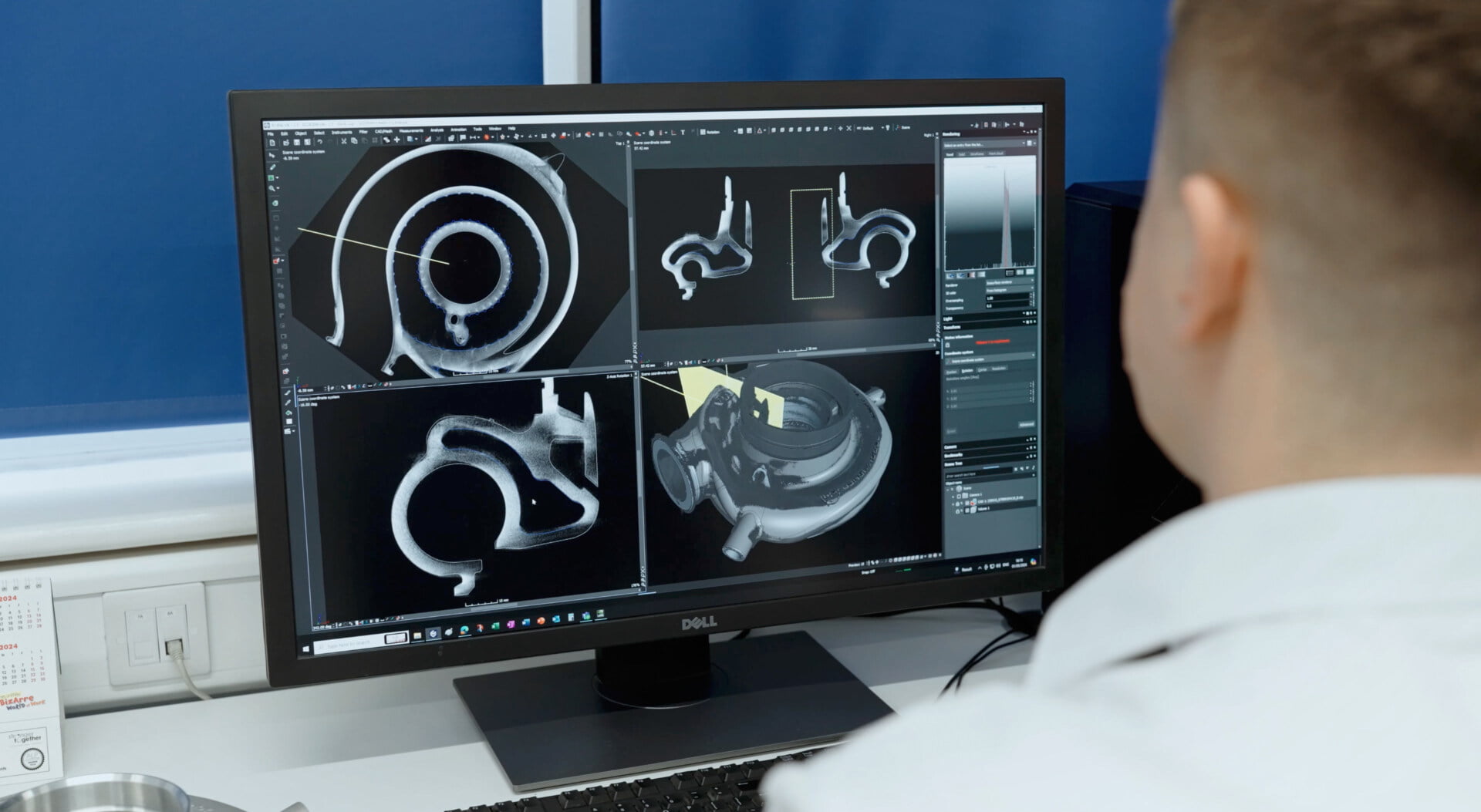
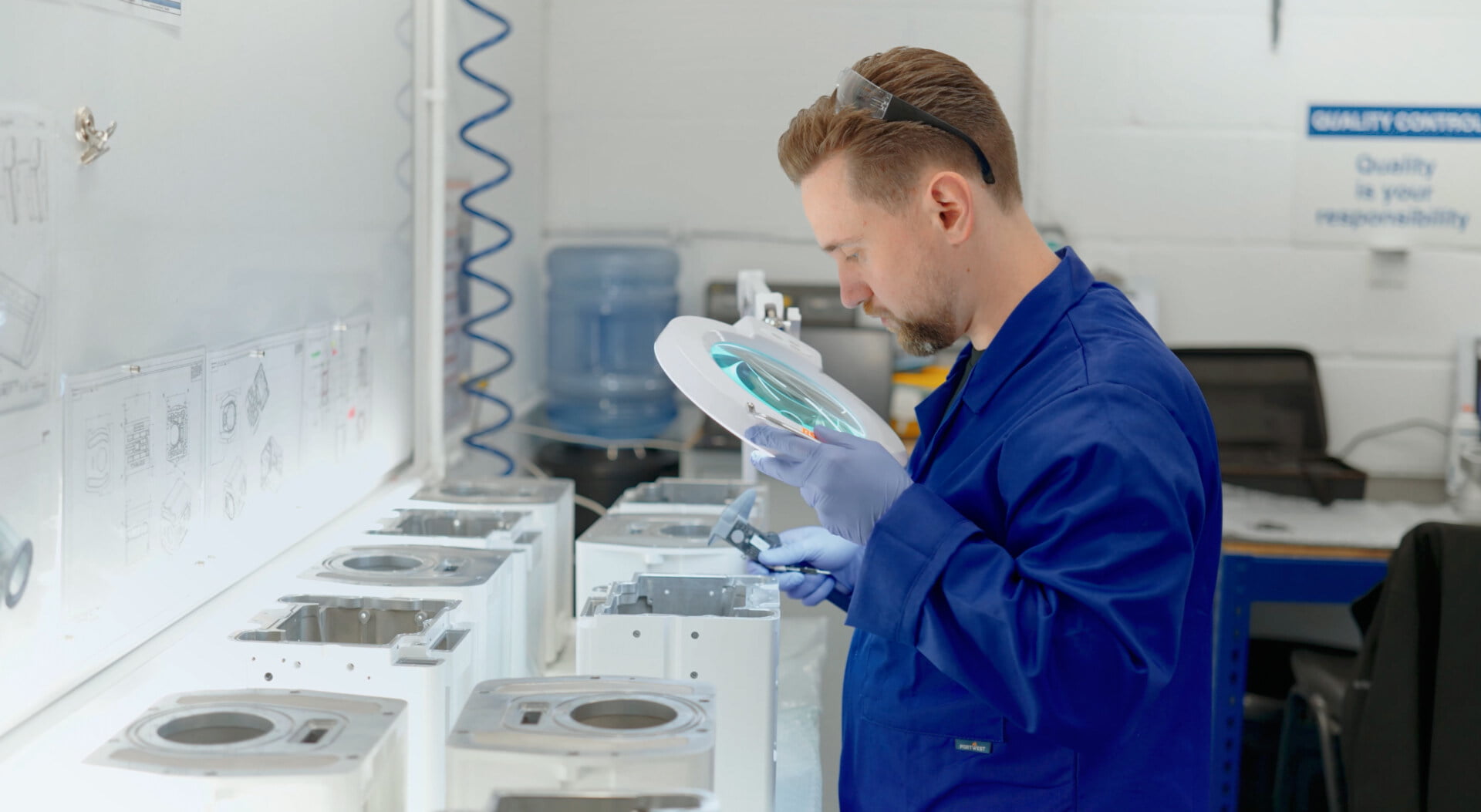
Quality claims become much stronger when viewers can see how standards are maintained. Inspection equipment, traceability systems, test procedures and documented checks all provide visible proof. Even a brief sequence can reassure buyers who need consistency, compliance or accurate reporting.
Where certifications matter, they can be referenced with restrained graphics or captions. The film should not turn into a list of logos, but it should make clear that quality is part of the production process rather than a final marketing statement.
Add customer evidence
A company film explains capability from the manufacturer’s perspective. Customer evidence adds an independent reason to believe it. A brief testimonial, project example or measurable result can show how the business performs in a real commercial setting.
When a full customer story is available, it may deserve its own film. Well-structured video case studies for manufacturers can combine the customer’s challenge, the manufacturing response and the final outcome in a format that supports complex sales decisions.
Explain sectors and applications
Viewers need to recognise where the company fits into their world. Showing relevant components, end uses or sector environments helps buyers understand whether the manufacturer has suitable experience. This can be achieved through footage, captions or concise interview references.
Avoid listing every market the company has ever served. Focus on the sectors that matter to the film’s purpose. A tighter selection makes the message feel more confident and gives the visuals enough time to communicate something meaningful.
Finish with a useful next step
The ending should make it easy for an interested viewer to act. Depending on the campaign, that might mean visiting a capability page, discussing a project, arranging a site visit or requesting a quotation. The call to action should feel like the natural conclusion of the story rather than an unrelated sales message.
It is also worth planning shorter versions for different channels. A main company film can support the website and sales presentations, while individual process clips can become manufacturing videos for social media. Capturing these variations during the same shoot improves value and keeps messaging consistent.
Build the film around evidence
A strong manufacturing company video does not need to contain every machine, department or service. It needs the right evidence: a clear proposition, purposeful facility footage, important processes, knowledgeable people, quality controls and relevant customer outcomes.
When those elements are organised around one audience and one objective, the result is easier to watch and more useful to sales teams. The film gives buyers a concise, credible view of the business and helps turn initial interest into a better-informed conversation.