Equipment maintenance is essential to safe, reliable production, but maintenance work is often difficult to explain to people who are not on the factory floor every day. A well-planned manufacturing video can make the routine, the reasoning and the consequences visible without reducing a technical subject to vague marketing language.
The most useful films do more than show a machine running. They show what operators look for, how engineers make decisions and why a particular maintenance step protects output. That clarity can support training, customer conversations, recruitment and internal improvement at the same time.
Start with the maintenance decision, not the machine
Before filming, define the decision the viewer should understand. It might be why a bearing is inspected at a certain interval, how a technician spots early wear or what happens when a planned shutdown is missed. This gives the film a clear narrative and prevents a sequence of attractive but disconnected shots.
Ask maintenance and production teams to identify the points that are usually misunderstood. Their answers can become the questions, demonstrations and cutaways that shape the edit. If the subject involves a complicated process, on-screen graphics that explain manufacturing processes can clarify terminology while the real work remains at the centre of the film.
Show the inspection process at useful scale
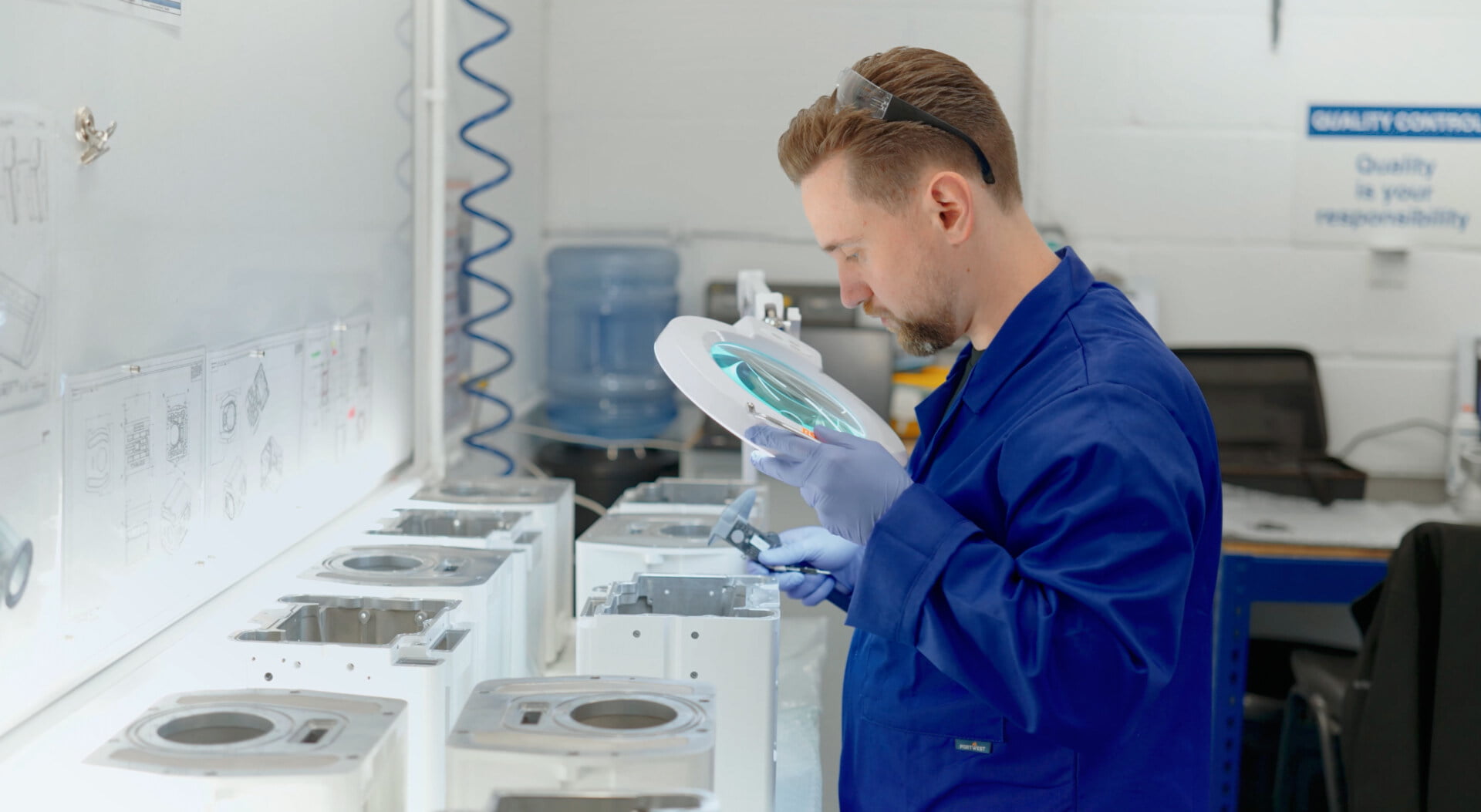
Maintenance is a story of detail and context. A wide shot can establish the line, but close footage should show the gauge, surface, seal, sensor or control panel that matters. Record the normal condition as well as the fault condition wherever it is safe and practical, so viewers can see the difference rather than simply being told about it.
Use a mixture of locked-off views, controlled movement and carefully chosen close-ups. Keep hands, tools and components in frame long enough for the viewer to follow the action. Good sound matters too: a technician’s explanation, the sound of a test and a short pause before a critical measurement can all make the sequence easier to absorb.
Keep people and safety visible
Equipment maintenance is carried out by people who bring judgement and experience to the process. Feature the technician or engineer explaining what they are checking, but let the work lead the conversation. A short, precise explanation beside the equipment will usually feel more credible than a heavily scripted piece to camera.
Plan filming around permits, lockout and isolation procedures, restricted areas and the production schedule. Do not ask anyone to repeat an unsafe action for the camera. A considered approach to filming safety-critical manufacturing work responsibly protects the crew and helps the finished video reflect the standards it is meant to communicate.
Connect maintenance to production outcomes
The audience needs to understand why the maintenance activity matters. Link the inspection to uptime, product consistency, energy use, delivery confidence or the prevention of an expensive interruption. Use simple language, but keep the claims specific and supportable. If a maintenance improvement has reduced stoppages, show how the result was measured rather than relying on a general statement.
This is also an opportunity to show how observations become action. A useful film can follow the path from a check, through a recorded finding, to a planned intervention and the return to service. When the story includes learning as well as procedure, it can support the wider culture of continuous improvement in manufacturing.
Plan versions for different viewers
One master film can provide the source material for several practical edits. A short overview may suit a customer or procurement audience, while a longer cut can help new starters understand the maintenance environment. Individual clips can answer recurring questions, introduce a specialist or explain one stage of a planned shutdown.
Keep a clear record of terminology, speakers and process details during the shoot. That makes future edits more efficient and reduces the risk of a new version losing the technical accuracy established in the original. The strongest maintenance videos are useful long after publication because they explain real work clearly, respectfully and precisely.